
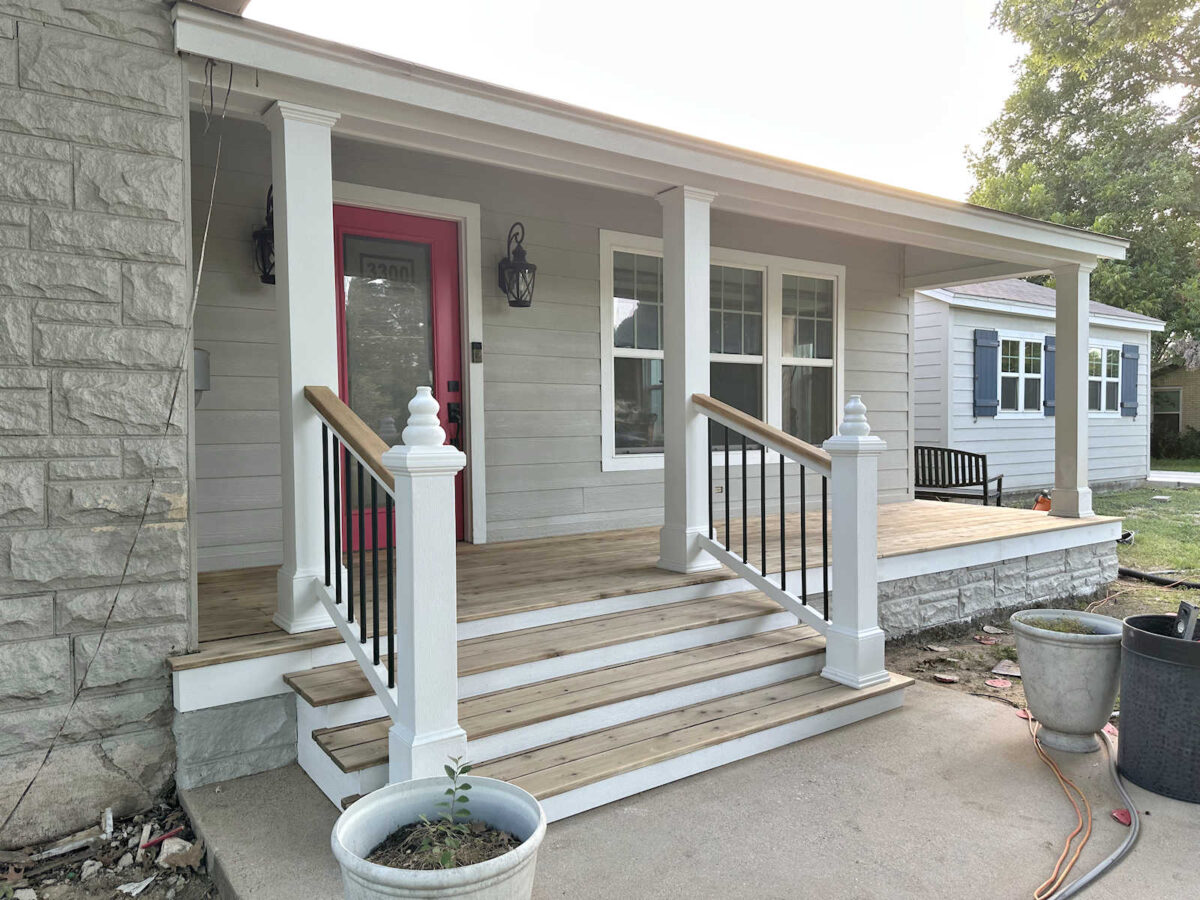
Over the previous couple of days, we had the proper climate for me to lastly be capable of seal my cedar entrance porch with pine tar and linseed oil. The rain stopped, after which I gave it a few sunny, dry, sizzling days to completely dry out. And with just a few sunny and dry days within the forecast, yesterday appeared like the proper day to sort out this mission.
Earlier than I might even get to the pine tar software, I had fairly a little bit of prep work to do. I had already sanded the porch just a few of weeks in the past, however I had solely sanded it with the intent to color the porch, so it was nonetheless wanting fairly splotchy with quite a lot of the outdated stain left behind. I additionally didn’t take any time to sand the seen areas between the boards.
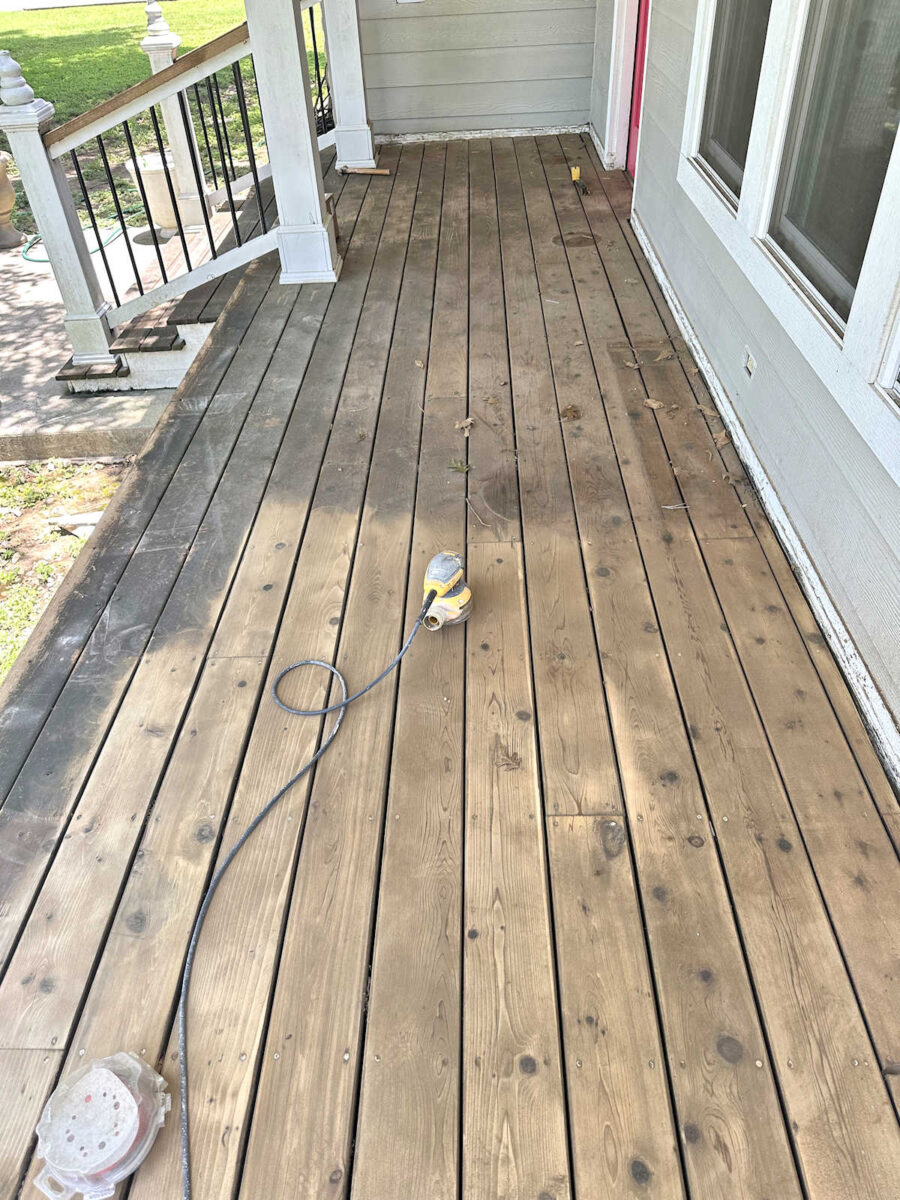
So now that I modified my plan, I mainly needed to begin throughout from the start. As I’m positive , sanding in preparation for primer and paint is a really completely different factor than sanding for stain. When sanding for primer and paint, the one objective is to be sure that every thing is easy. However when sanding for any form of stain (together with pine tar and linseed oil) that soaks into the wooden, the boards have to be sanded much more.
After which I sanded the entire thing once more with each 60-grit and 80-grit sanding discs. This time, I made positive to get the seen areas between the boards, and I acquired all the outdated stain off of the boards that I presumably might.
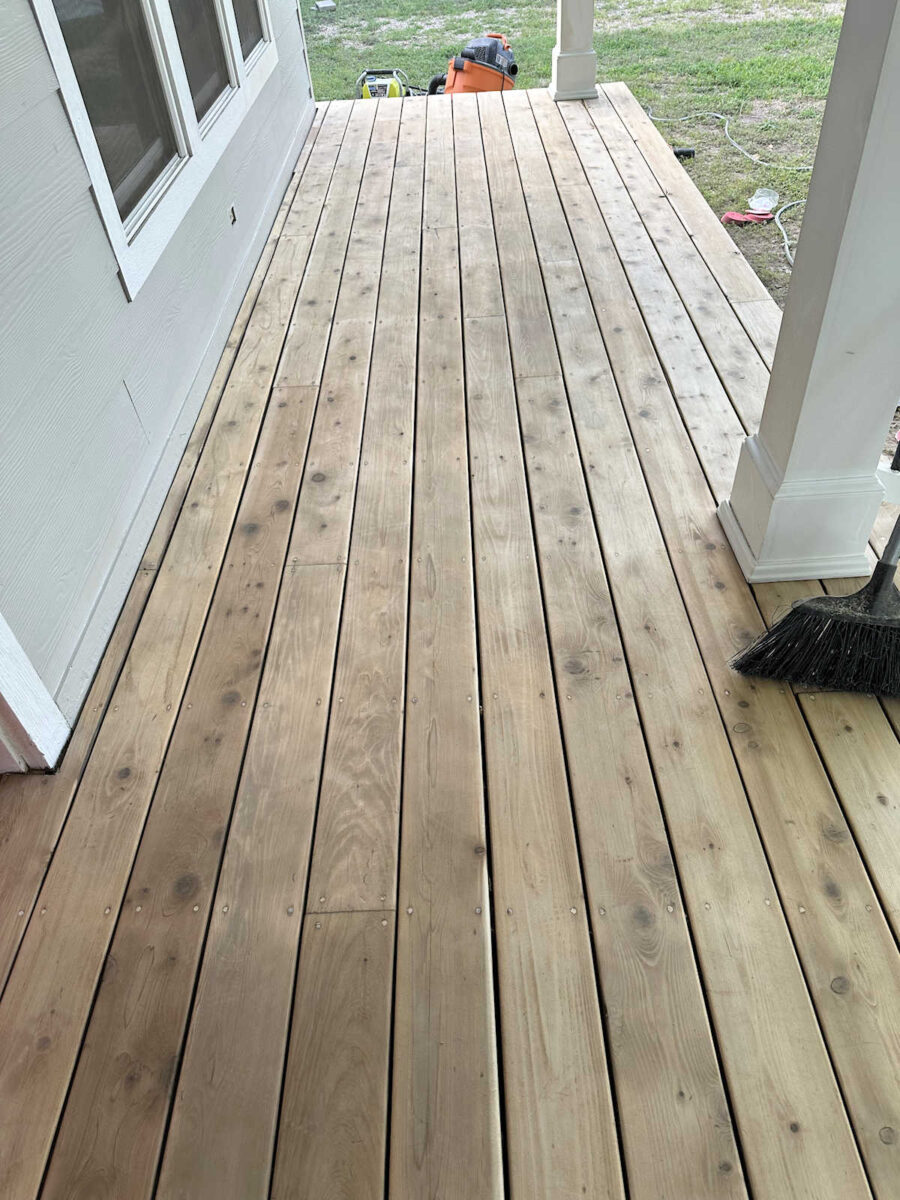
Earlier than making use of the pine tar and linseed oil, I examined the boards with the water check to verify they had been prepared for a penetrating product. To do the water check, you merely drip water onto the boards (I examined in about three areas) and see if the water soaks in or if it beads up on the boards. If the water beads up on prime, you need to do extra sanding as a result of if water beads on the boards, the boards gained’t absorb the end. But when the water soaks into the boards, you’re prepared for the penetrating end.
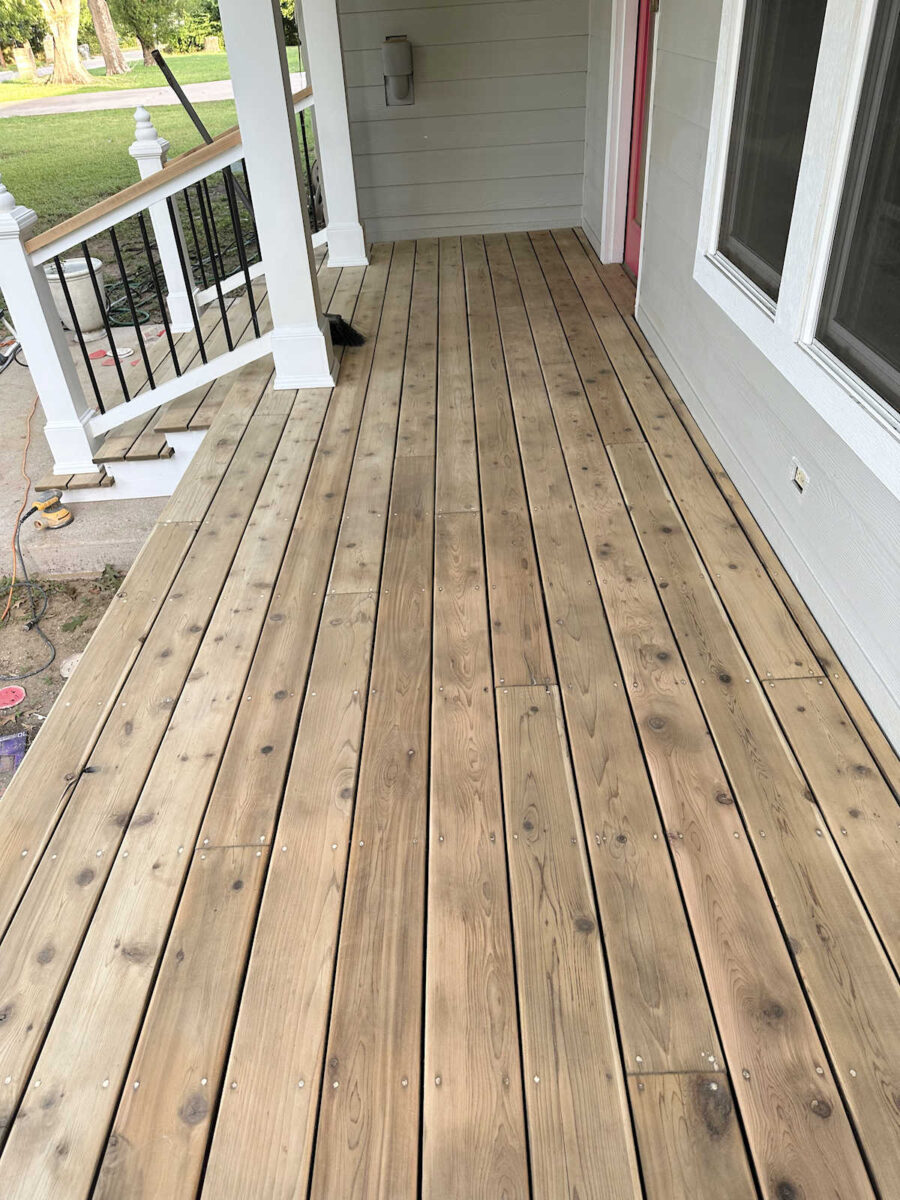
The wooden filling, sanding, and cleansing course of was the toughest and longest a part of the method. I don’t have a elaborate mud collector on my handheld sander, so it made an enormous mess and left mud in every single place. After every thing was sanded, I used my Store Vac to hoover the porch boards in addition to the siding to take away all the mud, after which I adopted up by sweeping the boards rather well to verify all the mud was gone.
That is the pine tar that I used, which I bought from Earth + Flax, and I selected the Genuine Brown shade. It is available in a extra pure shade if that’s what you favor, however I like a darkish stained porch. Each time I’ve stained my porch prior to now, I’ve all the time chosen a darkish shade. I simply love the excessive distinction of the darkish boards and the white trim.
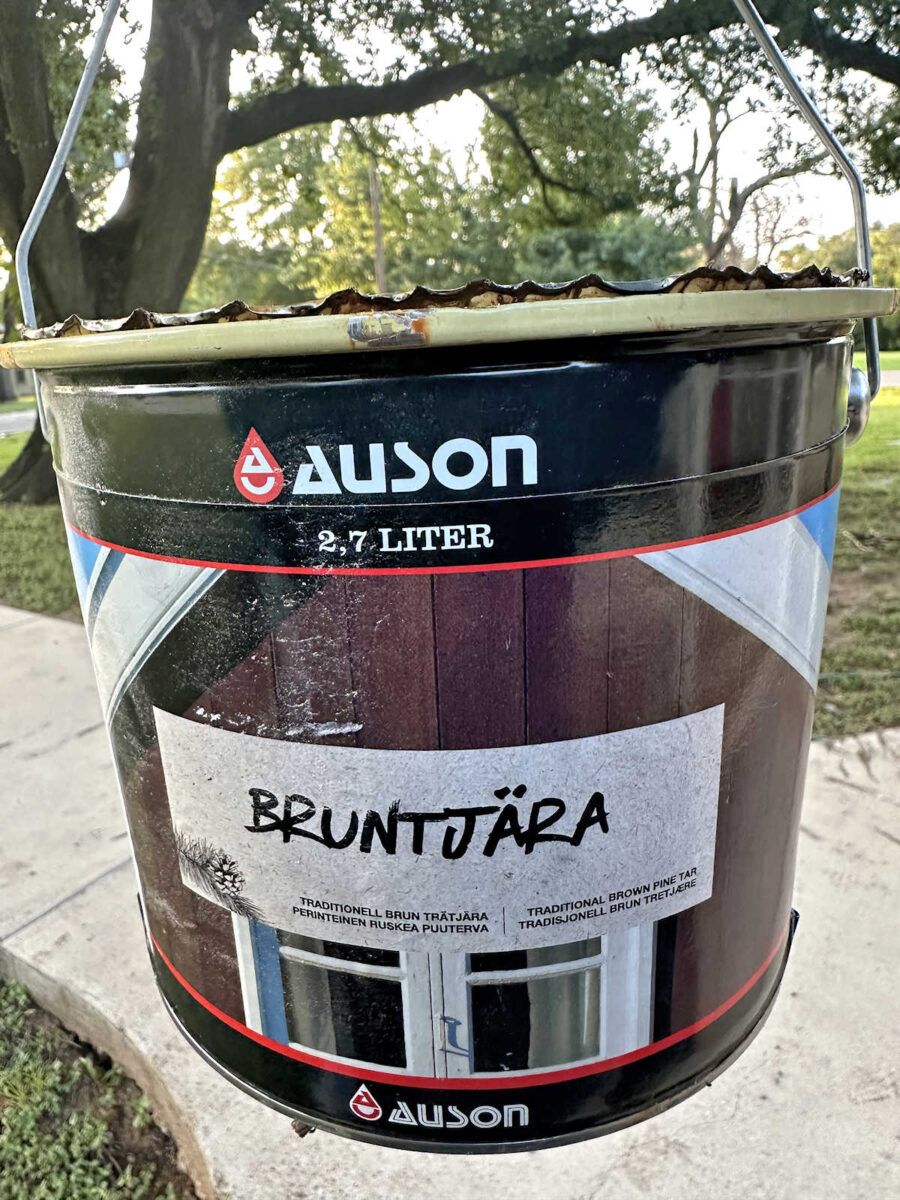
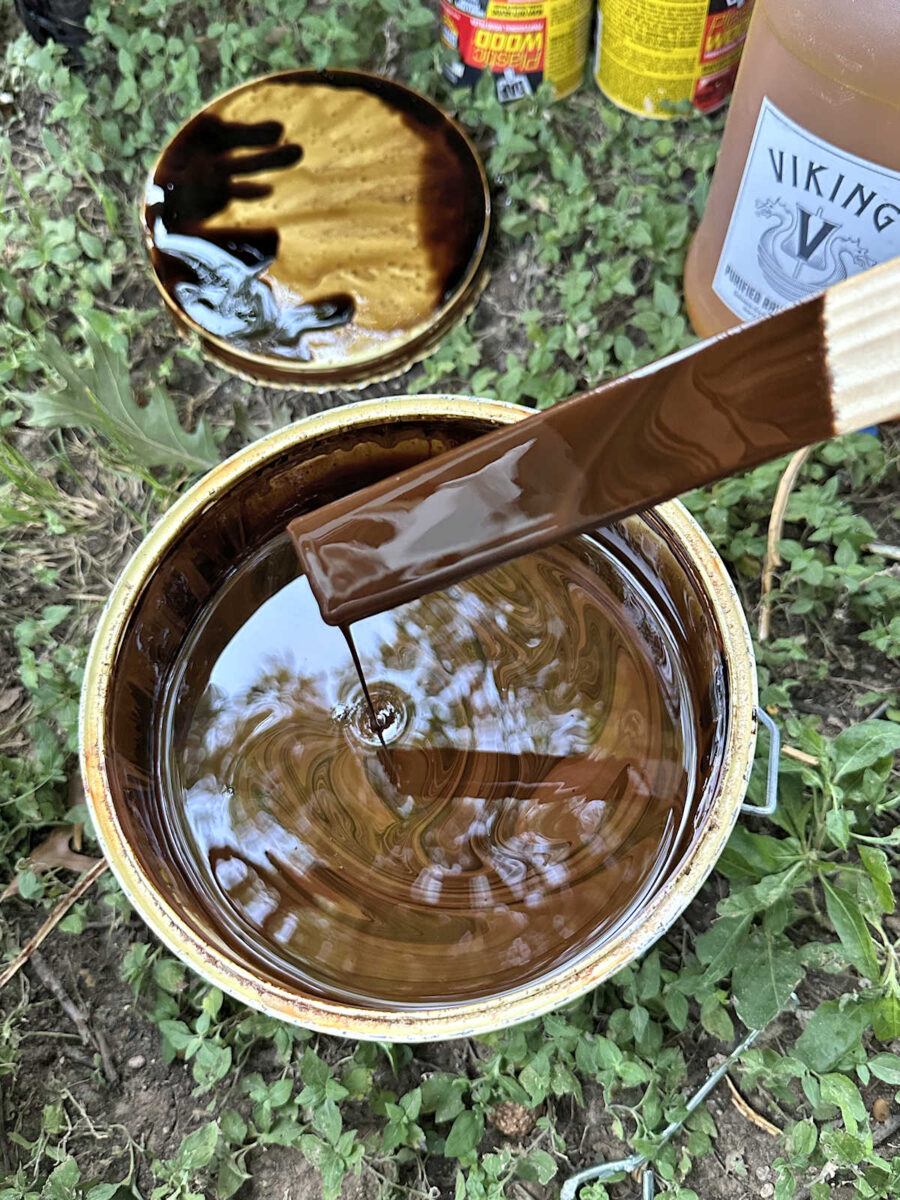
I’ve by no means used pine tar earlier than, so I wasn’t fairly positive what to anticipate. In my thoughts, one thing known as “tar” could be very thick, however because it turned out, it was really very skinny. It needs to be blended rather well earlier than you combine the pine tar with the linseed oil.
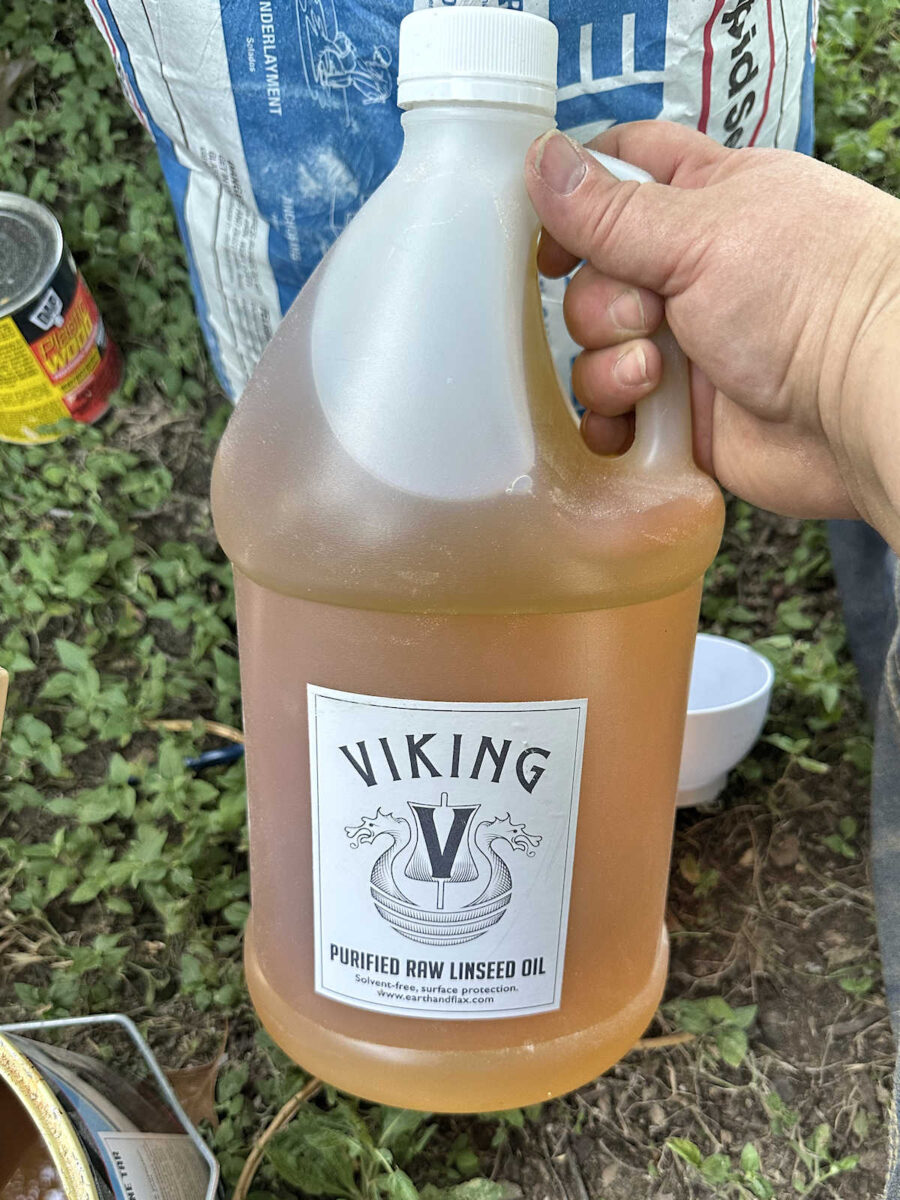
That is the linseed oil I used, which I additionally bought from Earth + Flax.
I initially blended the pine tar and linseed oil in a 1:1 ratio. The colour was very stable, so after testing that out on one small board within the far nook, I remixed it to 1 half pine tar to 2 elements linseed oil. It was nonetheless actually darkish (which I needed), however with the brand new ratio, it seemed loads much less stable.
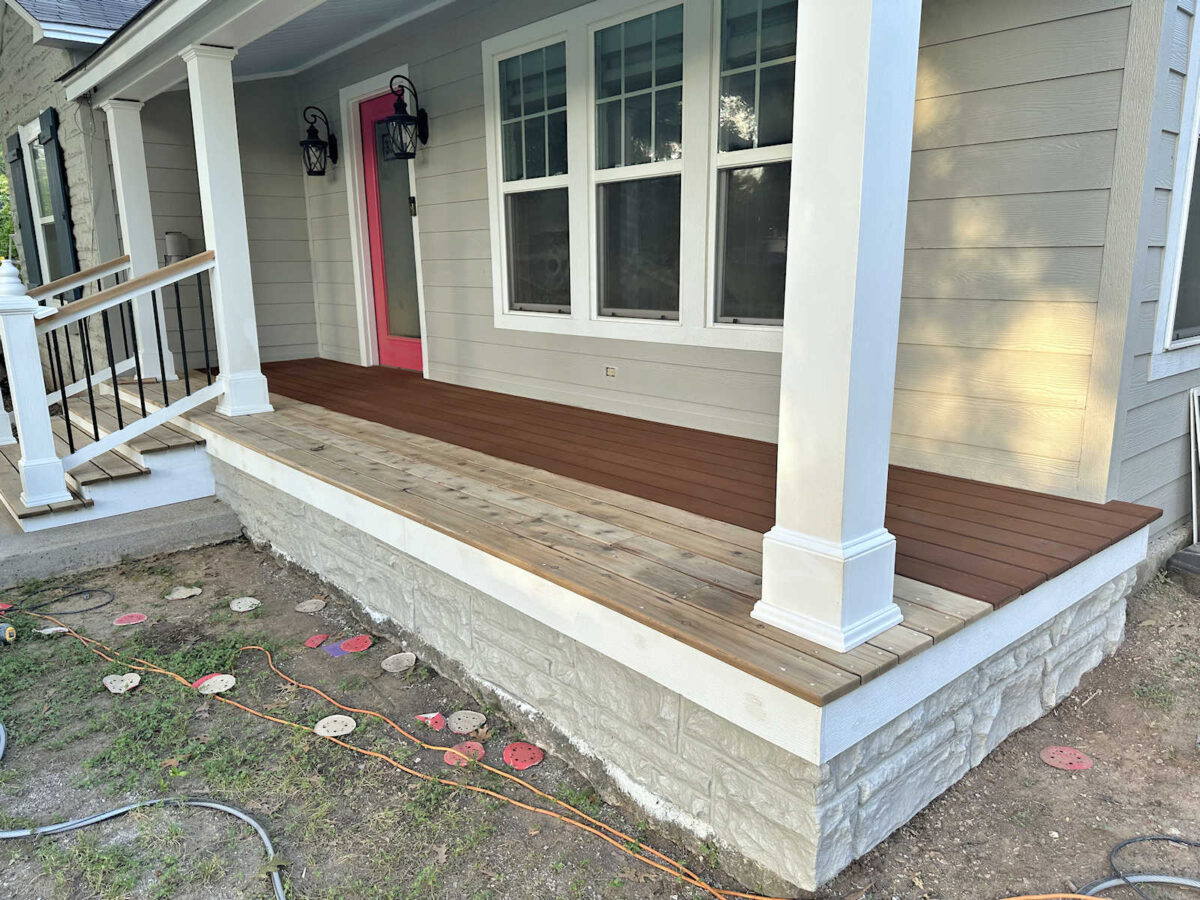
I utilized the pine tar/linseed oil combination with a 3-inch brush. It’s speculated to be utilized in skinny coats, however I did discover some buildup in areas as I went alongside. So I did two boards all the way in which throughout at a time, let it soak in rather well, after which went again and wiped any extra off with paper towels.
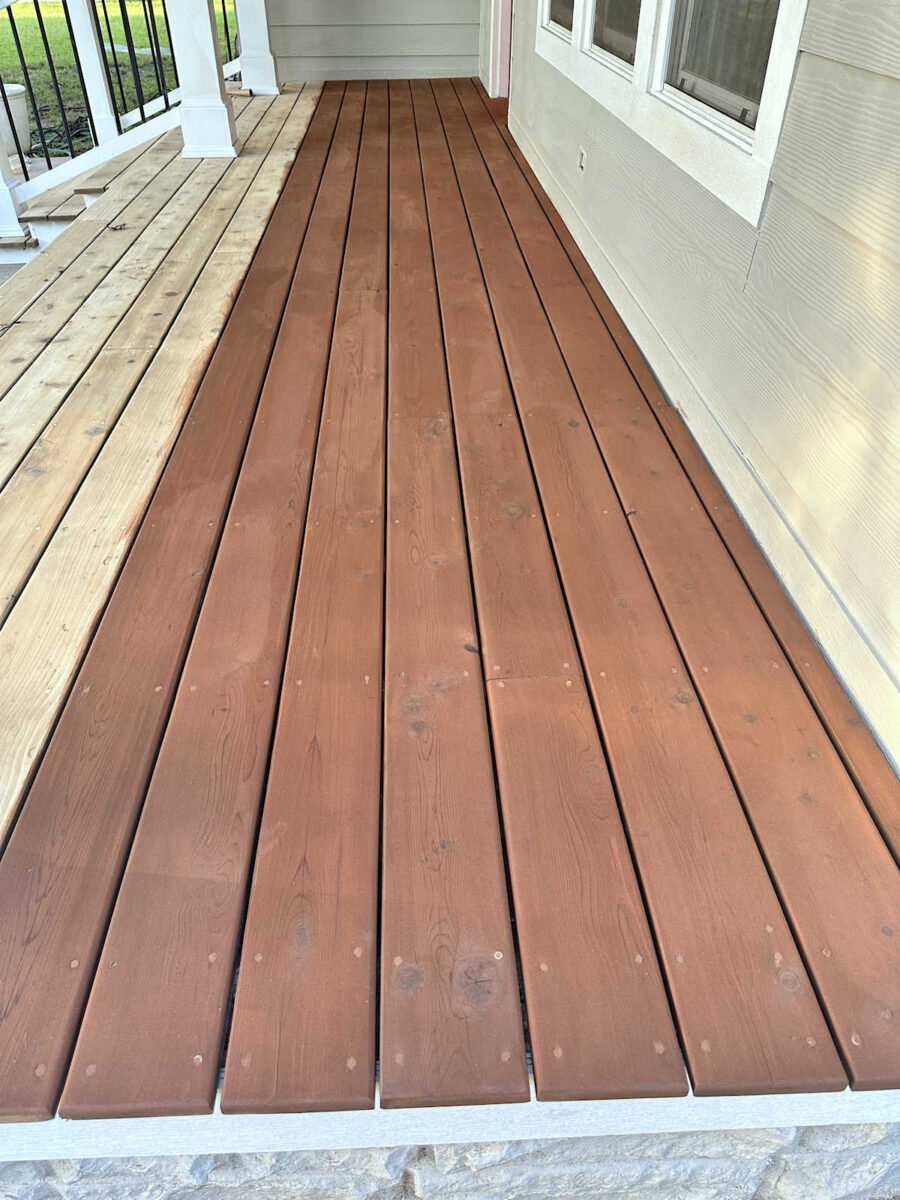
Be aware: Any paper towels or rags with linseed oil have to be positioned in a bucket of water after use. Linseed oil can spontaneously combust because the oil oxidizes if the warmth can’t escape because it dries. So by no means depart a used, wadded up rag stuffed with linseed oil mendacity round. After use, simply put it straight right into a bucket of water.
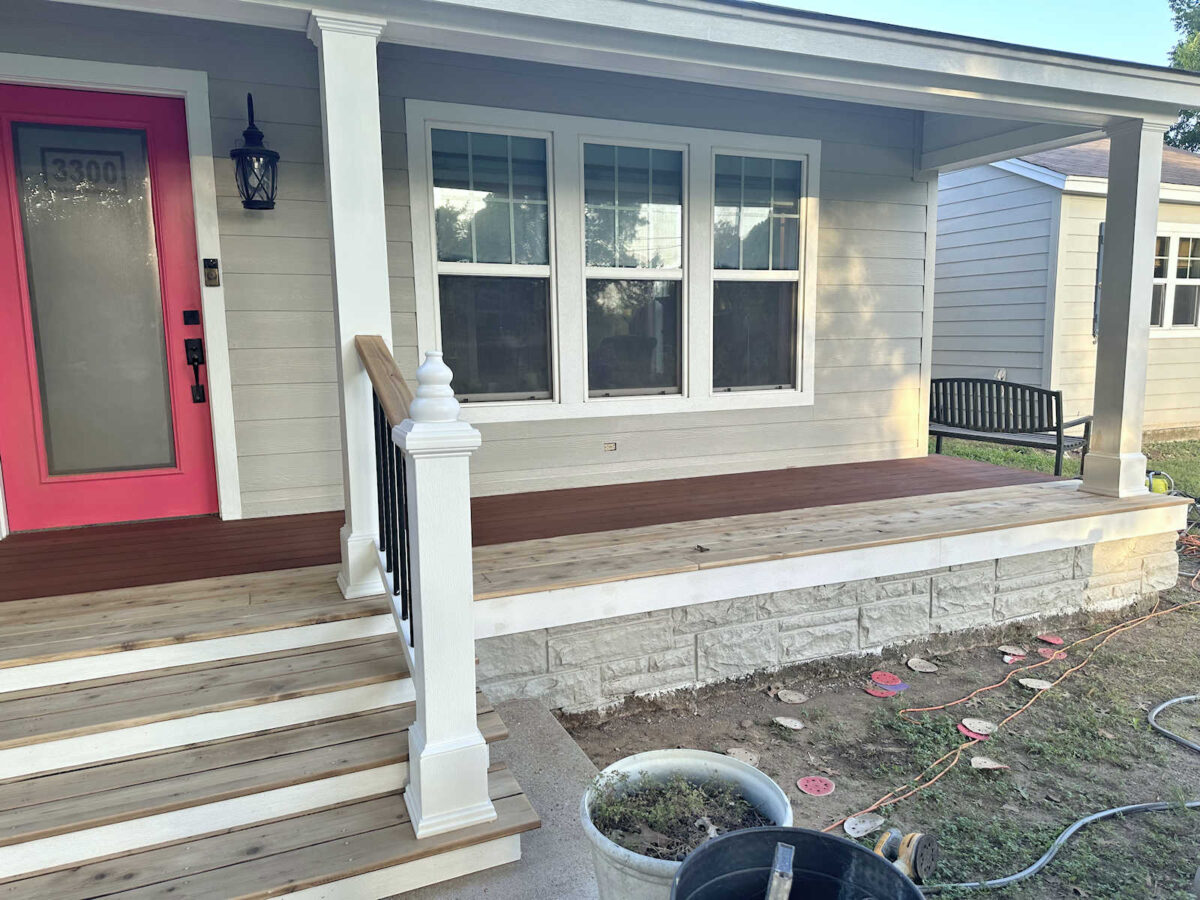
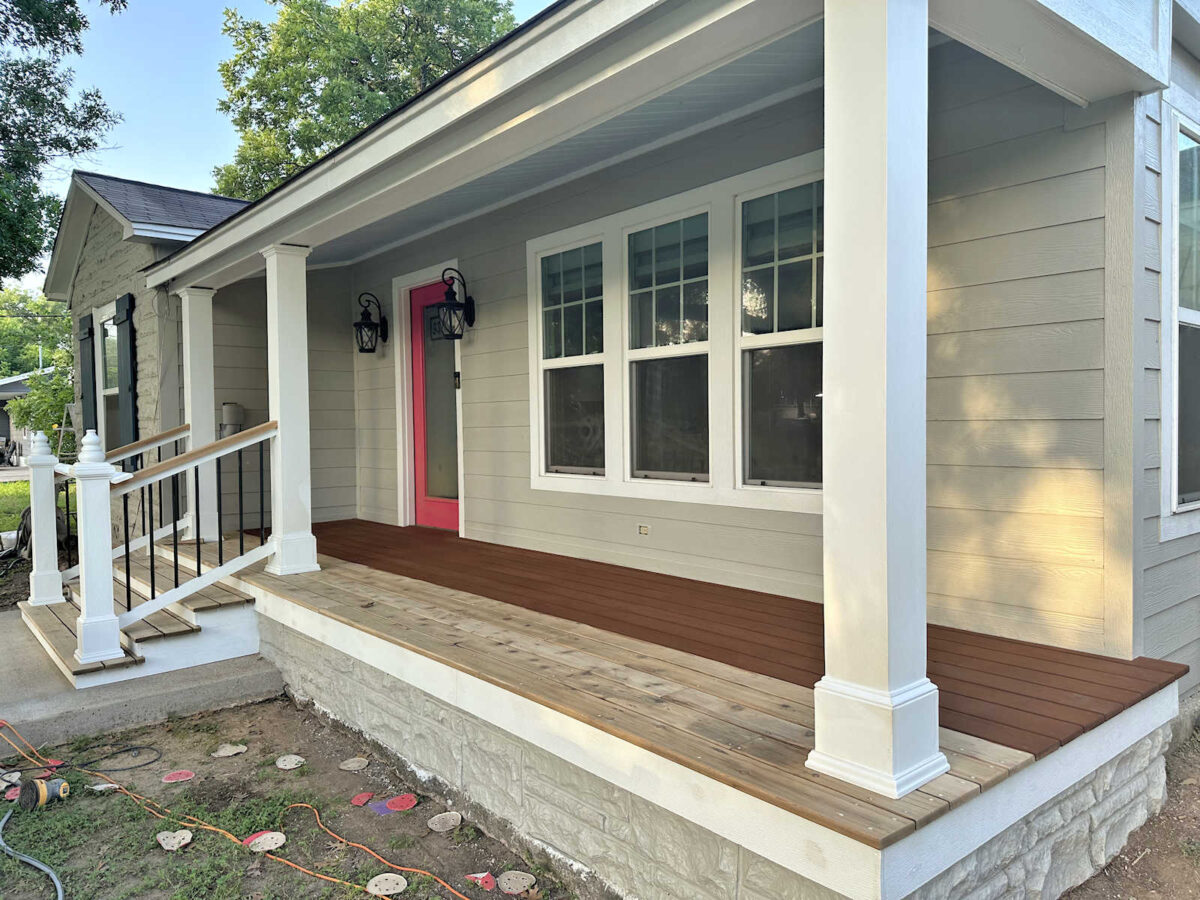
Sadly, I ran out of time and didn’t get the pine tar/linseed oil on the entire porch and steps. I labored till 9:30 final night time, working by the sunshine of my entrance porch lights, after which determined to name it quits for the day. However I completely love the way in which that is turning out.
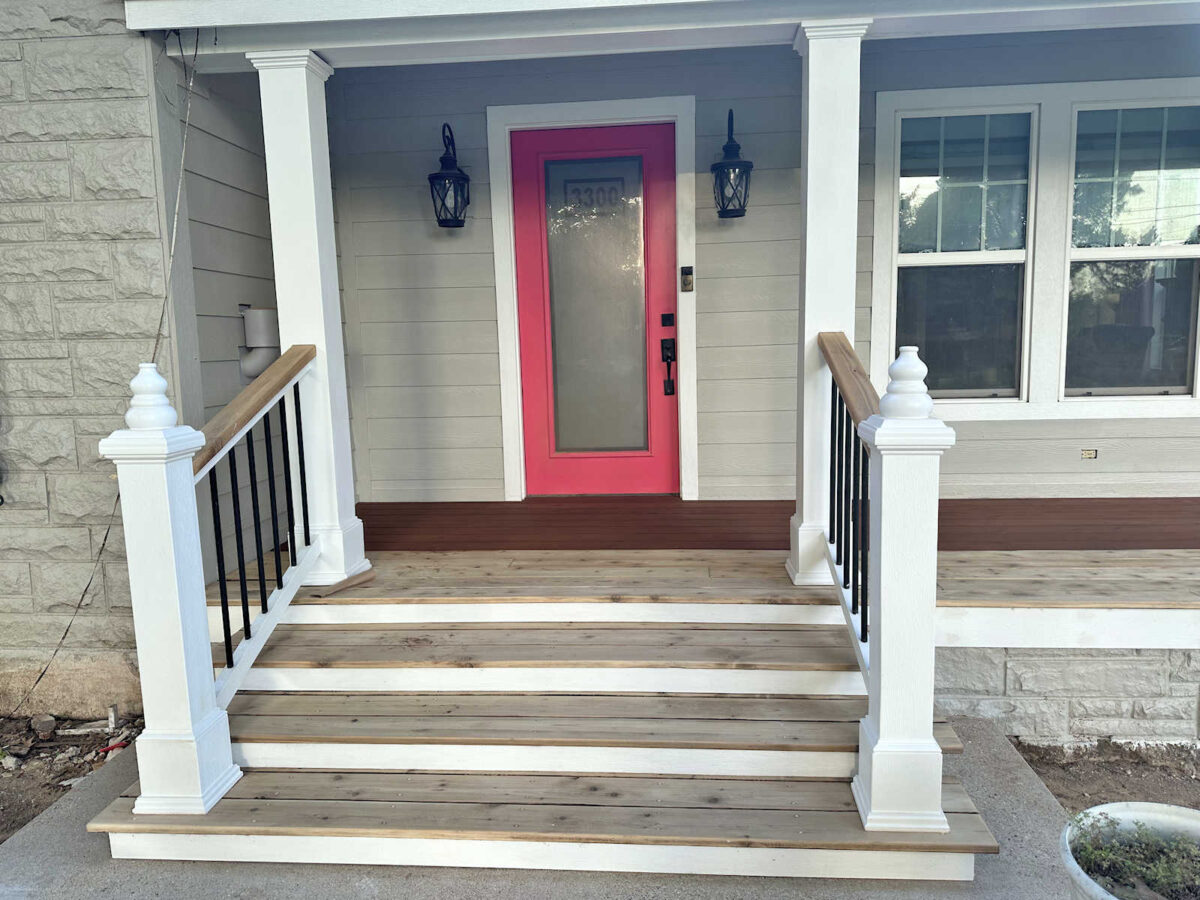
It’s actually darkish proper now, however I’m fairly positive it would fade some over time.
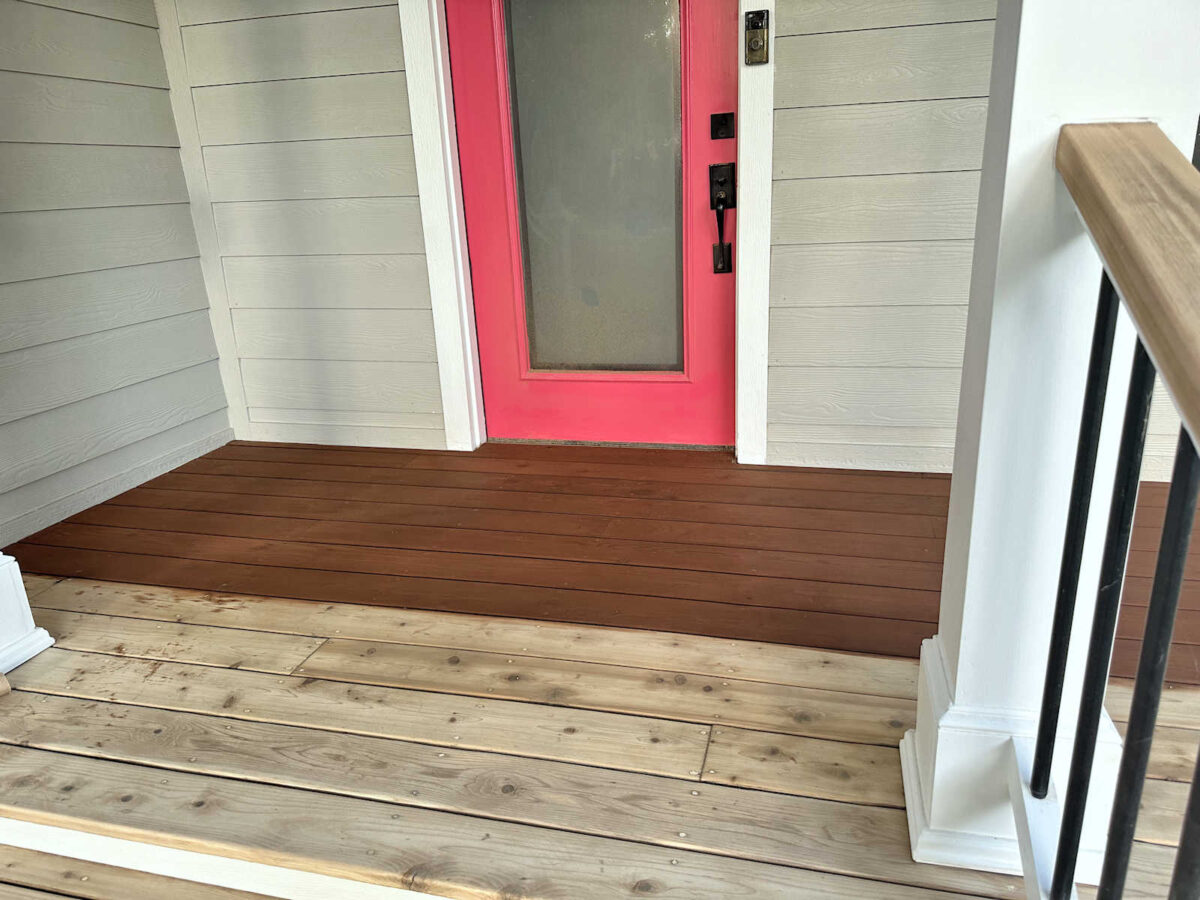
I’d examine the look to a semi-transparent stain. You possibly can nonetheless see the wooden grain and knots, however the shade is extremely constant over the entire space. And whereas I had learn that the pine tar/linseed oil wouldn’t soak into the wooden filler I used, it really did. I used to be totally ready to have to return and tackle the wood-filled screw holes individually, however I’m relieved to see that I gained’t want to try this.
Since this was my first time utilizing pine tar, and I volunteered to be the guinea pig for these of you who had been interested in it, right here’s my real opinion.
- It’s extremely straightforward to use. I discover it a lot simpler to make use of than any of the prior stain merchandise I’ve used. I used to be very shocked on the constant shade over the entire space, which is usually arduous to get with a regular stain product. With stain, you usually get darker areas in case you’ve already stained an space and then you definately attempt to mix in a brand new space. The colour builds, and it will get darker the place the comb strokes overlap. That doesn’t all the time occur, but it surely’s fairly frequent with stain. That by no means occurred with this pine tar/linseed oil combination.
- It has a really robust odor, which I used to be warned about a number of instances. However the odor is not like previous merchandise I’ve used. The previous stains and different merchandise I’ve used have an unnatural chemical odor. That’s what I’m used to. Pine tar doesn’t have a chemical odor, but it surely does odor like a campfire. After making use of it, you will odor such as you’ve spent the complete day standing round a campfire. Actually, I’d fairly odor a campfire than robust chemical substances.
- The one downside to pine tar and linseed oil is that it takes loads longer to dry. After I end this coat, I must wait 72 hours to use the subsequent coat. After which it takes weeks for it to completely treatment. You don’t have to attend that lengthy to stroll on it, but it surely’s a really slow-drying, slow-curing product. In order that’s positively one thing to contemplate in case you’re wanting a fast turnaround so as to instantly begin utilizing your deck or porch.
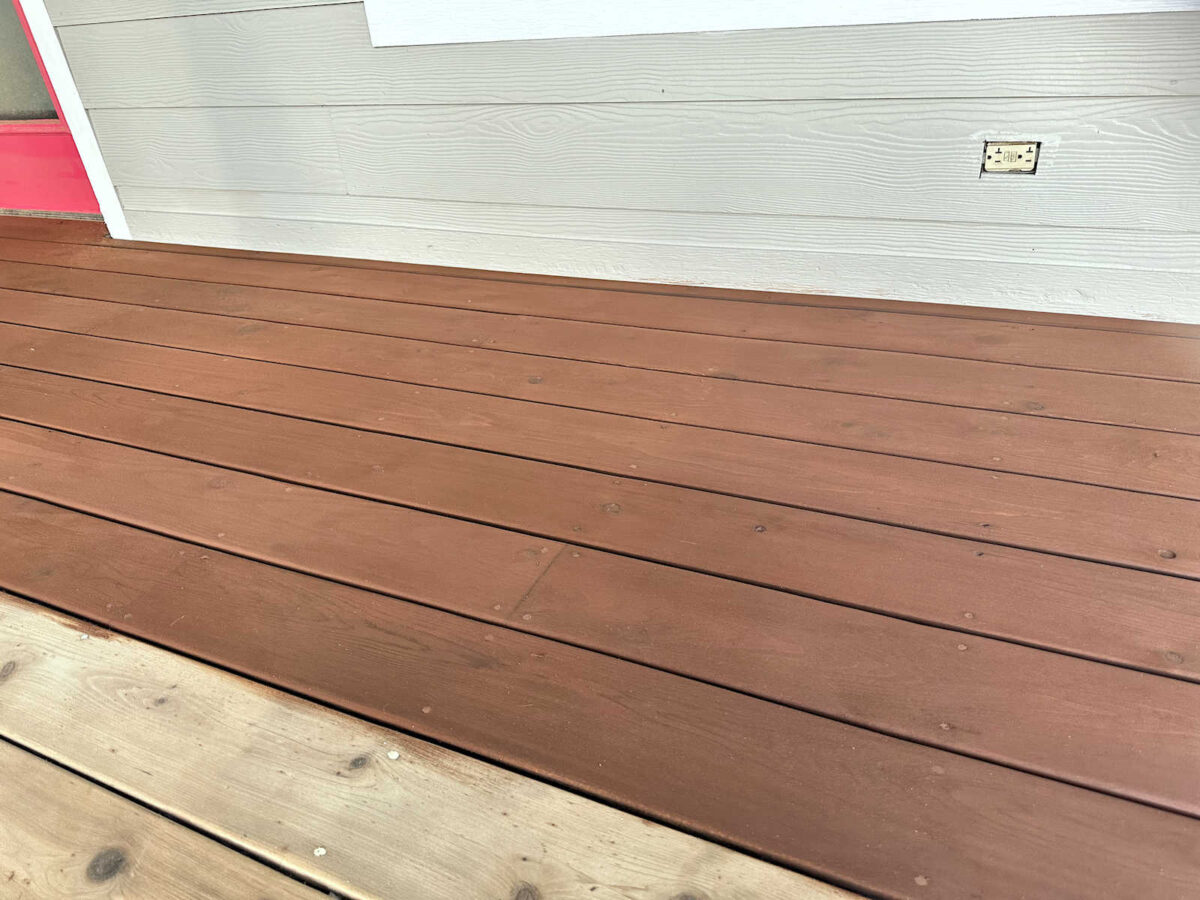
Anyway, thus far, I’m an enormous fan of pine tar. I feel it’s lovely and extremely straightforward to make use of. And most of all, I like that it’s all pure. I’m not coating my entrance porch with chemical substances. That’s a giant plus.
Extra About Our Home Exterior & Yard

see all exterior &
yard diy tasks
learn all exterior &
yard weblog posts

Addicted 2 Adorning is the place I share my DIY and adorning journey as I transform and adorn the 1948 fixer higher that my husband, Matt, and I purchased in 2013. Matt has M.S. and is unable to do bodily work, so I do the vast majority of the work on the home on my own. You can learn more about me here.
Trending Merchandise

UpCircle Rodillo de ojos 1 pieza – Para...

ESSENCE BRILLO DE LABIOS VOLUMINIZADOR WHAT T...


COSRX Advanced Snail 92 All in One Cream, 100...


